When History Is Rewritten Before Our Eyes
by Beth English

The views and opinions expressed in this post are solely those of the author and do not necessarily reflect the views, policies, or positions of the Organization of American Historians.
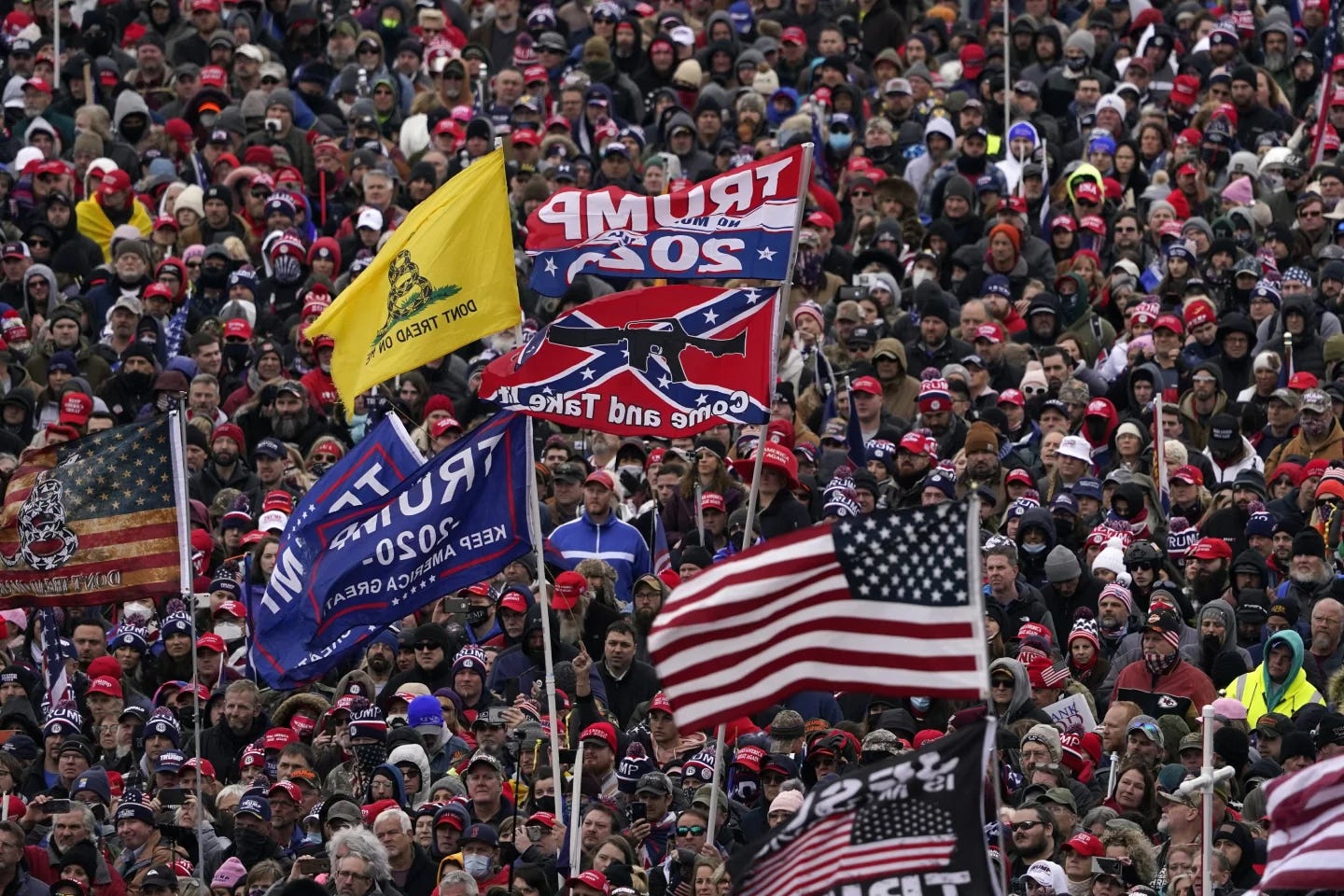
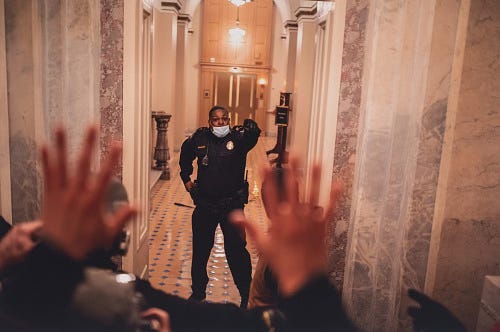
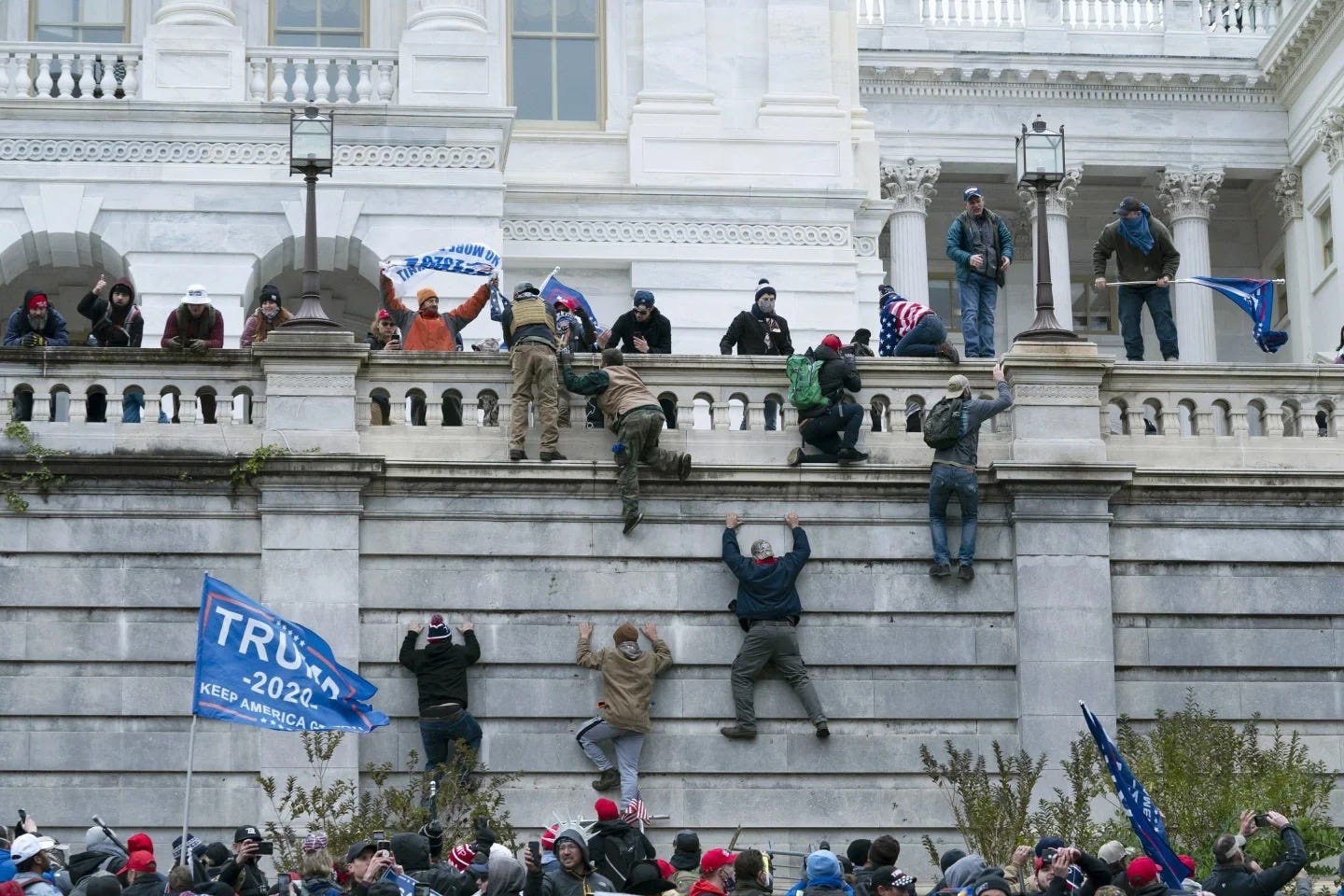
On January 6, 2021, Americans watched in real time as a mob stormed the United States Capitol to stop the certification of the 2020 presidential election. The violence was televised, livestreamed, photographed. On that day, the meaning of January 6 appeared fixed by the sheer weight of what had happened in plain sight. It yielded thousands of hours of video evidence, an impeachment of a sitting president for incitement of insurrection, a bipartisan congressional investigation and findings, and hundreds of individual criminal convictions.
The events that transpired are borne out by more than the visually documented events of that day and the memories and testimonies of those who were at the Capitol. Objects obtained by the National Museum of American History through rapid-response collection immediately after the event and expansion of its January 6 materials since bear witness: rally signs, posters, flags, small weapons, and other discarded materials left on the National Mall, election tally sheets from the certification process, personal items from U.S. Capitol Police officers, and the Smithsonian’s copy of the gold medal awarded to officers who risked their lives protecting the Capitol that day.
But five years on, history is being rewritten before our eyes.
The January 6 insurrection is no longer being merely debated. This is not spin for the media. The facts of that day are being officially rewritten.
This is most visible on the official White House website devoted to January 6. The page presents a version of events that inverts the historical record, calling that a “gaslighting narrative.” Rather than describing a violent insurrection fueled by the sitting president who refused to accept electoral defeat, the site recasts the events of January 6 as justified patriotic protest followed by what it characterizes as unjust prosecution and persecution of Trump supporters. In this retelling it was “the Democrats who staged the real insurrection by certifying a fraud-ridden election, ignoring widespread irregularities, and weaponizing federal agencies to hunt down dissenters.” The mass pardons of those convicted for their roles in the attack are celebrated as acts of clemency and correction. The White House narrative shifts responsibility onto political opponents, law enforcement, and the very post-election processes in place meant to protect and guarantee the peaceful transference of power from one presidential administration to another.
This is not the terrain of historical disagreement, rooted in new sources or avenues of analysis, or understanding events from varying perspectives. This is propaganda. It is not a quarrel among academicians, policy makers, or even political pundits over emphasis and interpretation. It is an assertion of narrative power, and an official attempt to rewrite the facts of January 6, 2021. When the federal government declares, through its own official platforms, that an event documented by overwhelming evidence was something else entirely, fact-based history itself becomes a casualty.
This all comes at the end of a year where executive actions have targeted federal cultural and historical institutions as well as public-facing historical information under the guise of restoring a purely celebratory “patriotic” history, rolling back “DEI,” and combatting “woke.” Edits to federal websites have deliberately altered the historical record by removing information about transgender and gay individuals, women, Black and Hispanic people, and Indigenous displacement. Executive orders specifically targeting the National Park Service and the Smithsonian have demanded adherence to American exceptionalism or, as the administration calls it, simply “Americanism.” Independence of our nation’s record-keepers—including the National Archives and the Library of Congress to the Smithsonian and the National Park Service—as well as scholarly thought, research, and interpretation remain paramount but are under continued assault.
In this light, the years-long attempt at altering public understanding of the events of January 6 was a canary in the coal mine, and in many ways sits at the center of a wider campaign against evidence-based history. If January 6 becomes protest instead of insurrection, and if those who breached the Capitol become patriots rather than criminals, then accountability and historical accuracy itself become partisan aggression rather than an obligation to the truth.
To be clear, what is happening now is categorically different than the reinterpretation historians undertake through rigorous evaluation and evidence from primary sources. This is not revision through scholarship that accurately widens the record, nor does it offer a nuanced understanding of the past. Revision through political fiat simplifies history and narrows it to overtly non-democratic ends.
Rewriting of the events of January 6—as well as other events in U.S. history—is more than an act of willful omission or reflective of disagreement about their meanings. In fact, disagreement itself is in danger of no longer being possible or mattering at all because the state has declared a single version of events to be true. When schools, museums, government websites, and courts align behind narratives untethered from evidence, the shared factual ground necessary for democratic self-government erodes.
History does not need to disappear completely to lose its power. It only needs to be rewritten so that it ceases to be a lesson, a touchstone, a warning. When that happens, the documented evidence no longer constrains power. This is historical denialism, not revisionism, and it represents a dire threat to democracy.
Beth English is a historian of the late nineteenth and twentieth centuries, and the Executive Director of the Organization of American Historians. She writes here in her personal capacity.
You have shared a rare and strong outlook, thank you my friend.
Thank you for this cogent commentary.