Saving America’s Story, A Declaration of War on the History Profession
by Jason Chernesky

The views and opinions expressed in this post are solely those of the author and do not necessarily reflect the views, policies, or positions of the Organization of American Historians.
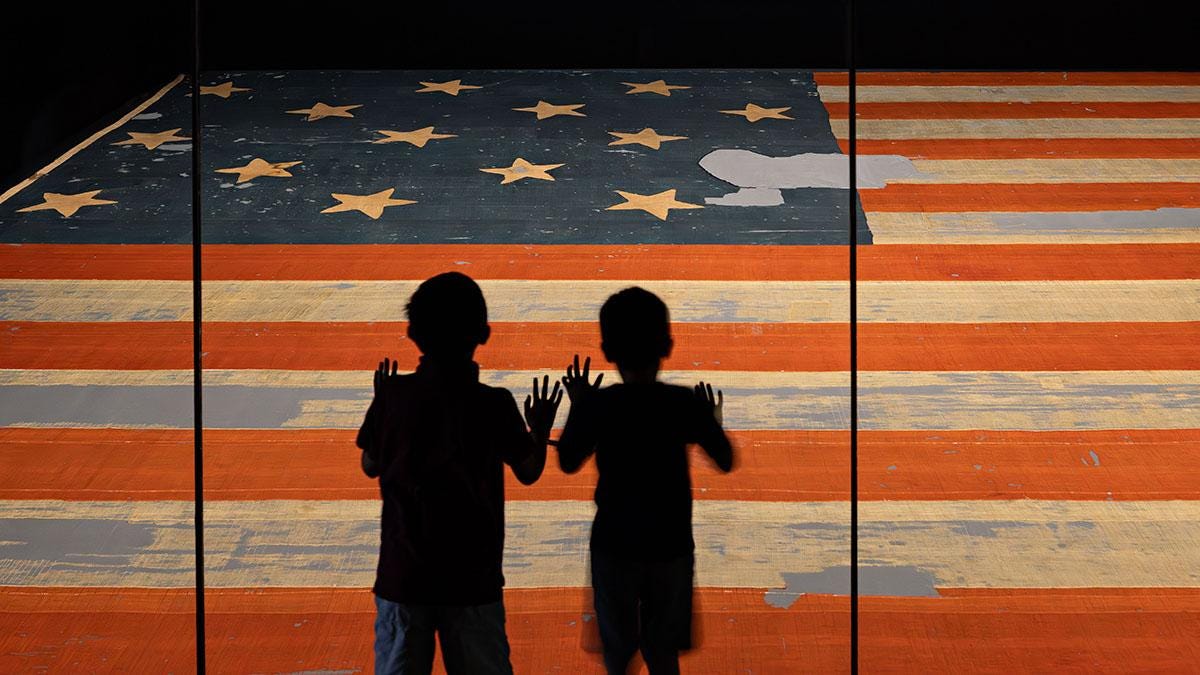
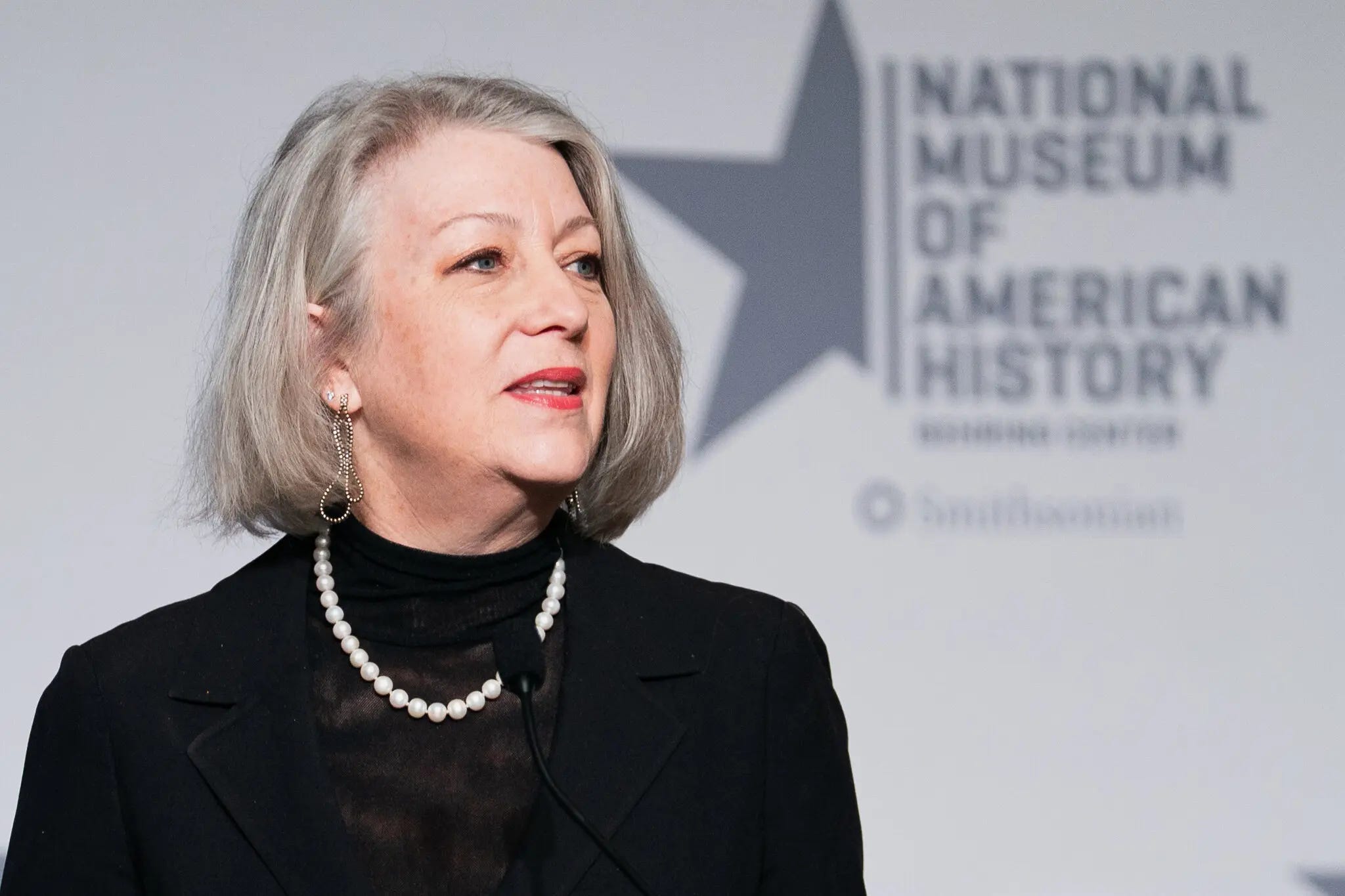
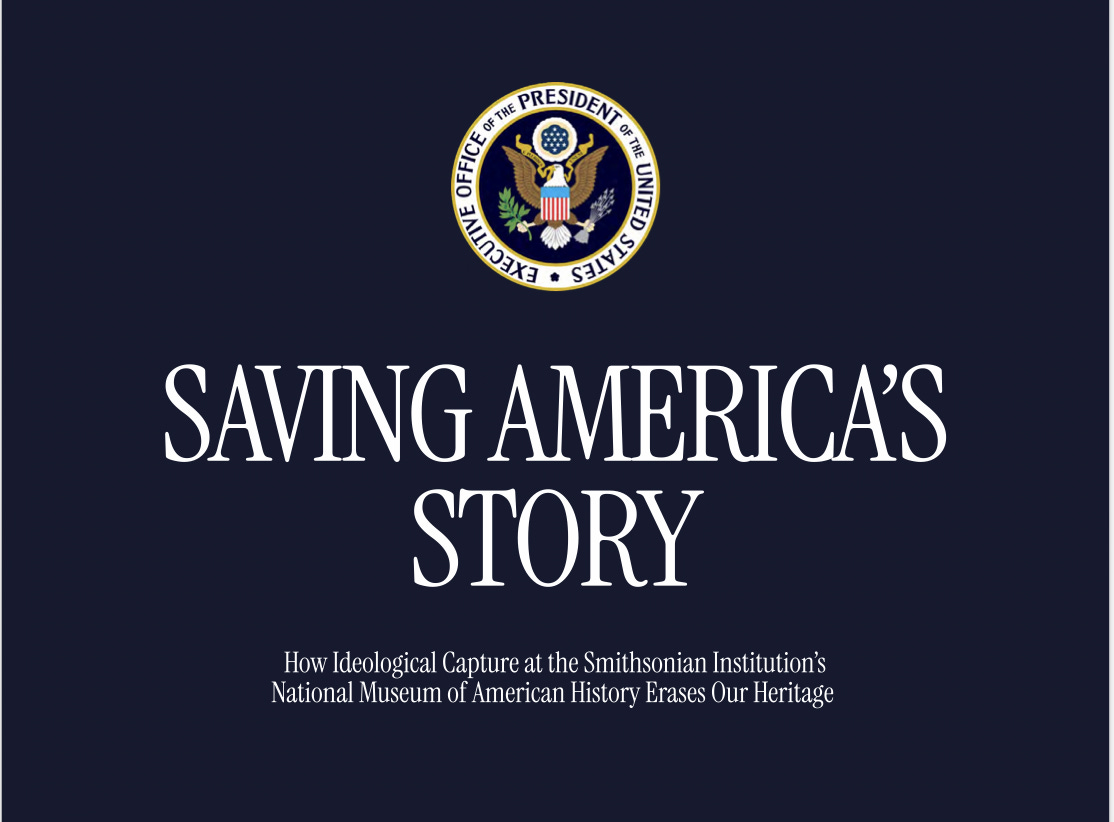
On July 24, President Trump ordered the posting of signs outside the Smithsonian’s National Museum of American History (NMAH), outside warning visitors that its history is inaccurate. The order followed two days of congressional hearings on a recently released report attacking the NMAH’s exhibits, practices, and educational materials. Masquerading as a rigorously researched assessment, the cherry-picked evidence clearly aims to oust current leadership—namely, Anthea Hartig—and achieve a much bigger goal: to present a sanitized and retrograde version of American history.
The report is not a rigorous or serious assessment of the NMAH’s practices, programming, and exhibits. Published by the White House’s Domestic Policy Council on July 4, 2026, the report’s main argument is that the “NMAH has become subject to institutional capture by a radical, activist ideology that is fundamentally opposed to telling the noble, honest story of the great country we know and love.” To support their claims, the authors provide selective examples lacking context and clear descriptions of research methods. Even a cursory reading reveals that the authors constructed a conclusion and went looking for “evidence” to support it.
Yet the report is not simply an uncritical, politically partisan smear campaign against the NMAH and its leadership. It also represents a serious attack on the professional historian’s craft and expertise. The report accuses professional historians of hijacking and trying to erase the “true” history of the United States—that is, despite some problems in our history, historical narratives should uncritically celebrate America’s greatness and achievements. More troubling, the report suggests that professional historians are dangerous, anti-American activists attempting to reshape American life and culture.
Early in Saving America’s Story, the authors make clear that the “findings of the museum matter beyond the museum world.” They suggest that not all Americans follow “academic theories and curatorial fashions.” The public, they assert, understand when “revered public institutions have traded settled truths and basic history for political activism and division.” For the report and the Council, the NMAH is thus a high-profile example of how decades-long changes in historical interpretations have corrupted how Americans understand the nation’s past. Rather than engaging with standard practices, methods, and ethics found among professional historians, the report insists there are fixed “settled truths” in American history. This is a woefully ignorant perspective of how historical scholarship works.
Historical interpretations are rarely fixed or settled. Historical knowledge improves when historians enhance old stories through the inclusion of new details, when assumptions about the past are questioned, and when once-excluded historical actors—e.g. the working class, women, children, LGBTQ people, African Americans, immigrants, and the lowly soldier—are woven into the grand narrative of American history. Historical interpretations have to change. We make sense of the past through the stories we tell about it, and like most stories, they are always made better with each draft. But unlike a rough draft of a story, historians do not discard the earlier ones.
In doing so, every new draft adds complexity and nuance to enrich old historical assumptions. But in the report, historical complexity and nuance are cast as serious corrupting forces that lead to a dangerous, negative view of our country’s history. For the authors, the grand narrative of American history is not complex. They hold a “basic consensus view” of American history that should highlight American exceptionalism and celebrate American innovation and prosperity. Moreover, any problems we faced—e.g. slavery, Jim Crow laws, and excluding Americans from voting—were inevitably overcome because of the nation’s founding principles of equality and liberty. These examples are what the authors refer to as “settled truths” in American history that should not be questioned or complicated.
For the authors, revising our narratives of the past is a disingenuous act of replacement, where whole swaths of our history are wiped away. When historians revise or reinterpret historical narratives, it is not meant to replace them; it is meant to improve them. Full stop.
But complexity, nuance, and ambiguity are central ingredients for making good, rigorous historical narratives. (After all, people and the past are complicated). These are positive attributes of historical scholarship and history education. For the authors, revising our narratives of the past is a disingenuous act of replacement, where whole swaths of our history are wiped away. When historians revise or reinterpret historical narratives, it is not meant to replace them; it is meant to improve them. Full stop. In this process, we debate, argue, and sometimes do not accept updated versions of old stories. And many historians, me included, would be open to difficult discussions about how we study and teach American history.
The authors of the report and members of the White House’s Council do not want to have those debates. Saving America’s Story and the White House’s Domestic Policy Council are not interested in improving American history. They seem more interested in making historians into anti-American radicals and delegitimizing our expertise. It is perhaps no surprise that historians are raising the alarm. In his opening statement at the July 21 House Subcommittee hearing, “Oversight of the Smithsonian: Radical Revisionism at the National Museum of American History,” historian David Blight provided a sobering assessment: the document is “nothing less than an act of political war on the historians’ profession.” He’s right.
Historians have been caught in culture wars before, but this time seems different. Since early in 2025, we’ve all experienced or seen this administration and its allies try to undermine our expertise and take control of our nation’s history. Saving America’s Story leaves no doubt about their intentions. It is, most importantly, a wakeup call for our profession and for those who cherish the full understanding of our country’s history. As historians, we must defend our craft—and we must do a better job educating the public about how we do our work. For the sake of preserving nonpartisan interpretations of our past, and for our democracy, we must not cede the telling of American history over to those who intend to use it as political propaganda. The history-consuming public and the profession must come together to ensure this doesn’t happen.
Jason M. Chernesky is a historian of medicine and public health. He is currently the Project Director and Lead Oral Historian for the OAH’s Federal Employees and Contractors Oral History Project.
Great read and perspective Jason
Thanks for sharing
C
Thank you, Mr. Chernesky, for a rational response to dt’s irrational attack on the history of our country. And thank you Kevin Levin for sharing it.