America's 250th X
Porn on the 4th of July

by Nancy Tomes
The views and opinions expressed in this post are solely those of the author and do not necessarily reflect the views, policies, or positions of the Organization of American Historians.
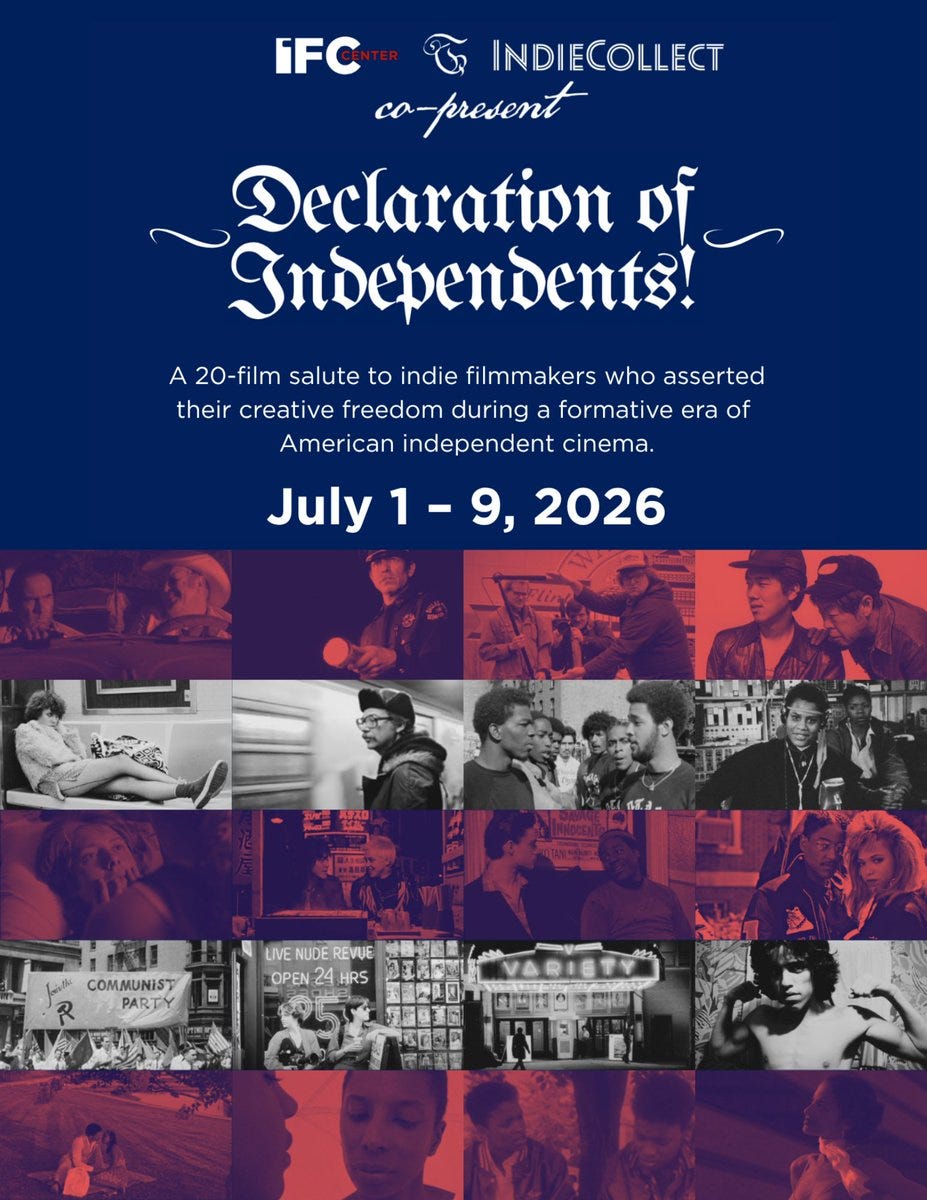
Over the July 4th weekend Americans across the country came together to celebrate the nation’s birthday in a spirit profoundly different from the Trump administration’s decidedly un-historic “Salute to America 250.” As just one example, here’s a grassroots report from one such event that took place just up the road from Washington, D.C., in New York City’s Greenwich Village: a “Declaration of Independents” that paid tribute to another revolution, that of independent film makers as “artists who re-shaped cinema, revealing America through an independent lens.”
From July 1 to July 10, the IFC Center, an arthouse cinema on 6th Ave., screened 20 films made between 1979 and 1989 that did just that.
So for my “declaration of independents” day, I went to a showing of the 1986 film “Rate It X,” followed by a Q&A with its producers, Lucy Winer and Paula De Koenigsberg.
I had been hearing about this film for years from Lucy, a documentary filmmaker I got to know and love as historical consultant on her 2012 film, “Kings Park: Stories from an American Mental Institution.” I knew that “Rate It X” had been her first big success as a documentarian; the film was selected for the Sundance Film Festival in 1986 and broadcast on PBS that same year. Janet Maslin reviewed it positively in the New York Times, saying it “assembles some amazing data, examples no feminist could make up.”
In its day, “Rate It X” became a classic of the guerrilla filmmaking that feminists and other activists began to do in the 1980s. But as film technologies changed, it ceased to be shown; its celluloid format doomed “Rate It X” to oblivion—until the 2020s, when film preservationists began to collect funds to restore it in digital format. The July 5 screening was the first in decades, made possible by financial and technological support from the Sundance Foundation, the Women’s Film Preservation Fund, Michelle and Peter Blacksberg, and IndieCollect.
Since HARPP celebrates preservation, let’s give a shoutout now to film preservationists.
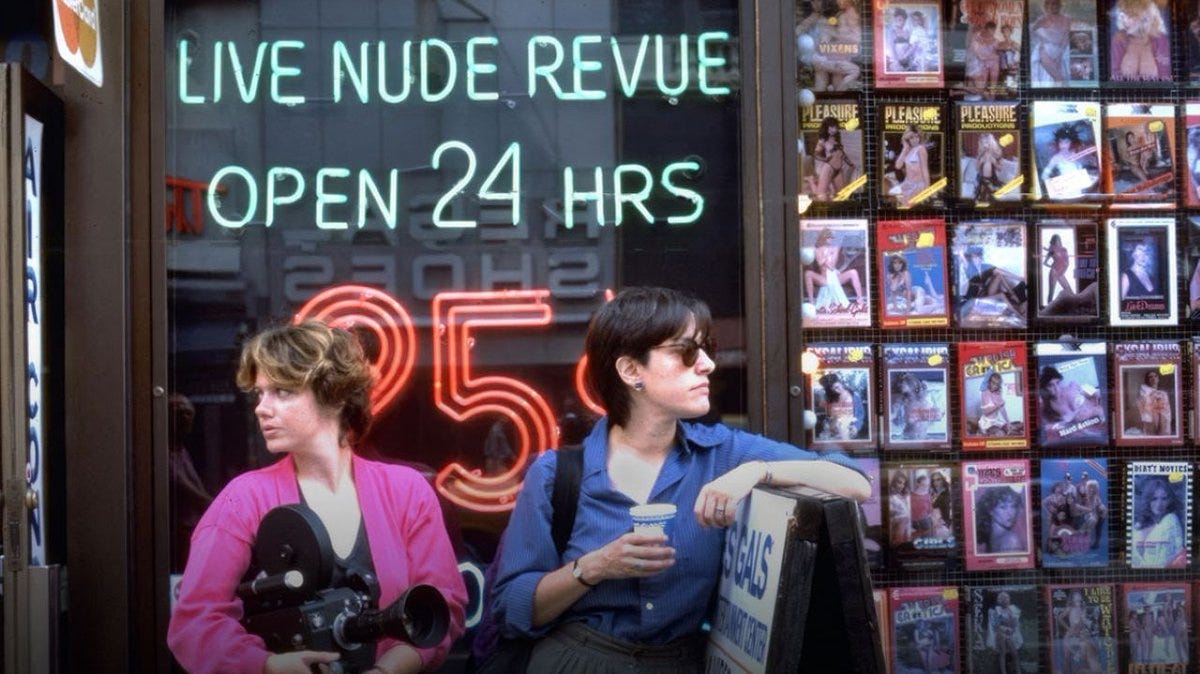
Between 1981 and 1985, Lucy and Paula filmed “Rate It X” using what was by 1980s standards a generous investment. Executives associated with the British TV station Channel 4 commissioned them to do a film about the American feminist anti-pornography campaign. Although part of that movement, Lucy and Paula wanted to move beyond the didactic scolding that characterized contemporary feminist critiques on the porn industry. They reached out to women’s groups across the country to tell them about controversies over sexist imagery roiling their communities.
Then equipped with a 16 mm camera, recorder and microphone, Lucy and Paula set off to interview the men behind those controversies and explore their thinking. How did they think about what they were doing and its possible impact?
One of the most stunning aspects of the film is the open, unrepentant pride and joy that almost all the men interviewed felt about their business use of objectified female bodies. George Urban, who developed a cable TV show called “The Ugly George Hour of Truth, Sex, and Violence” featuring his exploits getting women to let him film them naked in NYC byways, presented himself as the poor American immigrant who made good. The Hustler cartoonist Dwaine B. Tinsley likewise stressed how his success as the artist of “Chester the Molester,” a comic strip devoted to a middle-aged pedophile’s creative efforts to trap and sexually abuse girls under the age of 12, helped him fulfill the American dream of a home in suburbia. Joel M. Reed, director of the 1976 S&M torture/horror film “Blood Sucking Vampires”—who Lucy and Paula were initially scared to interview—assured them that the torture scenes in his creation were just “fun” in the long tradition of what made American films so good.
The power of the documentary reflects the filmmakers’ decision to juxtapose these stories with other interviews: to sketch the continuum of male attitudes from “soft” to “hard” that make the commodification of the male gaze not only profitable but legitimate. As “Rate It X” documented, it was not just the porn makers but other more respectable men invoking sexist attitudes and images to sell their products. Lucy and Paula filmed a baker who made cakes in the shape of headless bikini-clad women, then demonstrated how to carve them up so everyone can get the part they prefer; he noted how he liked the breasts. There’s the funeral home director who explained how he appealed to ideals of femininity and masculinity when people came to pick out their loved ones’ coffins. Then there’s the executive from “Lily of France” who proudly described the lingerie advertising campaign that he was inspired to develop in response to his daughter’s endorsement of second-wave bra burning.
When it screened in 1986, “Rate It X” got a lot of attention but also inspired its own controversy. … Given the state of the porn debate in 1986, it’s not surprising that the reaction to “Rate It X” was complicated.
When it screened in 1986, “Rate It X” got a lot of attention but also inspired its own controversy. Those of us who lived through the 1980s remember that the politics of porn were complicated. Not all second wave feminists wanted to contribute to the larger right-wing crackdown on sexuality gaining traction in the 1980s. Within the LGBTQ movement, queer activists questioned the assumption that all porn was bad, and that everyone who made or enjoyed it should be ostracized. In the film, Lucy and Paula acknowledged the freedom of speech issues involved as well as the issue of “choice” women exercised in participating in the porn economy.
Given the state of the porn debate in 1986, it’s not surprising that the reaction to “Rate It X” was complicated. In the Q&A session, Lucy recalled how stressful it was to go to screenings when if first came out. She recounted how at one event soon after its release, she went to the bathroom after the film concluded, and heard someone outside her stall say, “I can’t wait to get my hands on that filmmaker!”
In retrospect, Lucy couldn’t remember what that angry person later berated her about; likely it was criticism of the choice Lucy and Paula made only to interview men and allowing them a far too hospitable opportunity to justify their sexism. But perhaps even more disappointing to Lucy and Paula was the audience’s overall silence during the film; they did not laugh or vocalize in any way. “Rate It X” seemed to make watchers in the 1980s deeply uncomfortable.
They need not have worried: the world chronicled in “Rate It X” is still very much with us. … Therein lies the power of documentary film making[.]
The film got a very different response on July 5, 2026, when I saw it. During the hour and a half screening, the audience of about 100 people, ranging in age from their 20s to their 80s, laughed, groaned, and gasped in horror. The biggest vocalization came at the end with this big reveal: the restored film included a frame noting what later became of Dwaine B. Tinsley, the creator of “Chester the Molester.” In 1990, he was convicted of molesting his daughter and sentenced to six years in jail; after he served two of those years, his sentence was overturned when an appeals court ruled that the jury’s viewing of the comic strip violated Tinsley’s first amendment rights. The prosecutor decided not to retry him. Lucy and Paula revealed that they only found out about Tinsley’s conviction a few years ago, when the film restoration project began. (At the end of his nine hours of filming, Tinsley asked that they film him playing with another, younger daughter, a scene that was included in the documentary. For more on the case, see Most Outrageous by Bob Levin.)
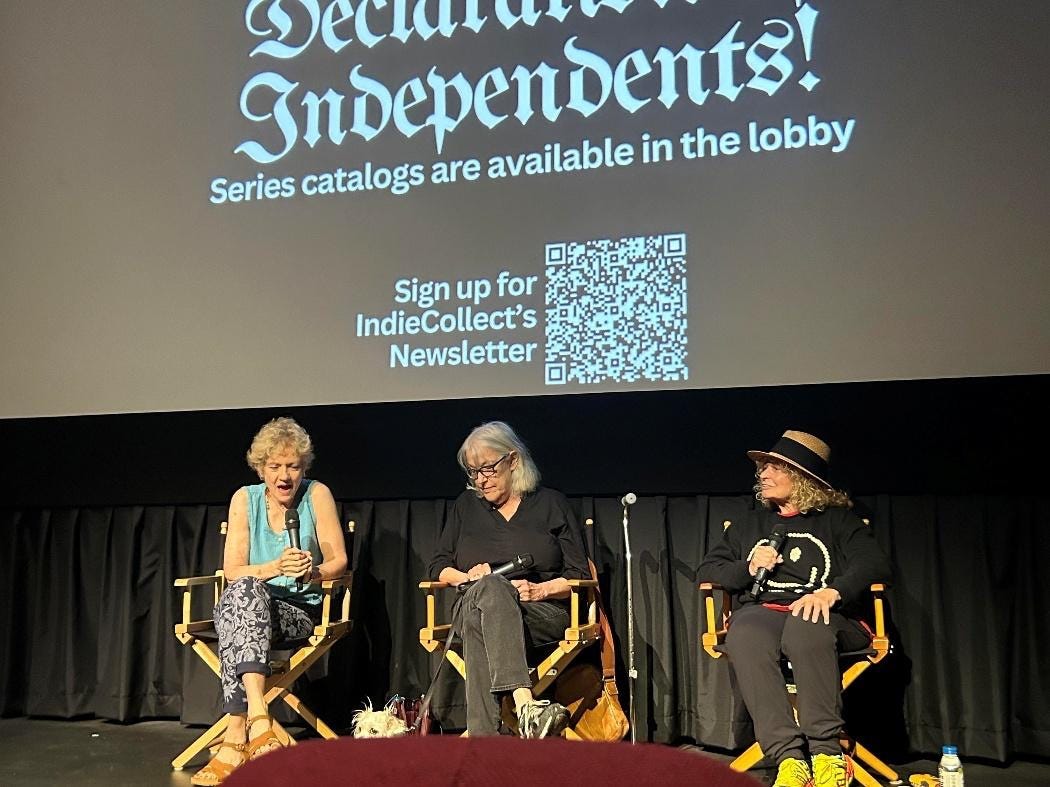
After giving the film a standing ovation, many stayed on for the discussion. Their questions and comments made clear that they saw the connection between the 1980s era documented in “Rate It X” and today’s America. The throughlines seem obvious: from Chester the Molester to Epstein, from “Ugly George’s” cable show to reality show star Donald Trump, the first ever President to be a convicted sex offender. As one person in the audience suggested, things have somehow gotten worse. Lucy and Paula had wondered how their 1986 documentary would land with younger audiences. They need not have worried: the world chronicled in “Rate It X” is still very much with us.
Therein lies the power of documentary film making: Lucy and Paula, along with the team that helped them make the film in 1986, and the team that restored it in 2024, have created an unforgettable look at the 1980s that once again is available for viewing. There will be small, theatrical showings of “Rate It X” around the country. Watch for one coming to your town. Soon the film will be available for widespread use through the film distributor Kino Lorber. And the same preservationist collective is now raising funds to restore Lucy and Paula’s 1984 film “Silent Pioneers: Gay and Lesbian Elders.”
A final nod to the now passed 250th birthday: “Rate It X,” which was begun only a few years after the Bicentennial, reminds me of the “revolutionary history” of the 1970s that my fellow HARPPer Marc Stein has written about in his new book, Bicentennial, and also his new OutHistory exhibit on queering the bicentennial—especially the introduction and the Bicentennial Mandate section that addresses gay porn and the bicentennial.
Let’s be encouraged to remember: the people find a way to tell their own stories. That’s a reality that is cause for celebration, one that will endure long past Trump’s sad excuse for a July 4th celebration on the National Mall.
Nancy Tomes is a Distinguished Professor of History at Stony Brook University.